Rosemary Oil vs Minoxidil: Which One is Better for Hair Growth?
Hair loss affects millions of men and women worldwide. Whether it’s caused by genetics, stress, hormonal imbalance, poor nutrition, or lifestyle, watching your hair become thinner can be frustrating.
Among the most searched hair growth solutions are rosemary oil and minoxidil. Both have gained popularity for promoting healthier hair, but they work differently.
So the question is:
Should you choose rosemary oil or minoxidil?
In this detailed guide, we’ll compare both scientifically and help you decide which option is best for your hair.
What is Rosemary Oil?
Rosemary oil is an essential oil extracted from the leaves of the rosemary plant (Rosmarinus officinalis).
For centuries, it has been used in traditional medicine to improve blood circulation, reduce inflammation, and promote healthy hair.
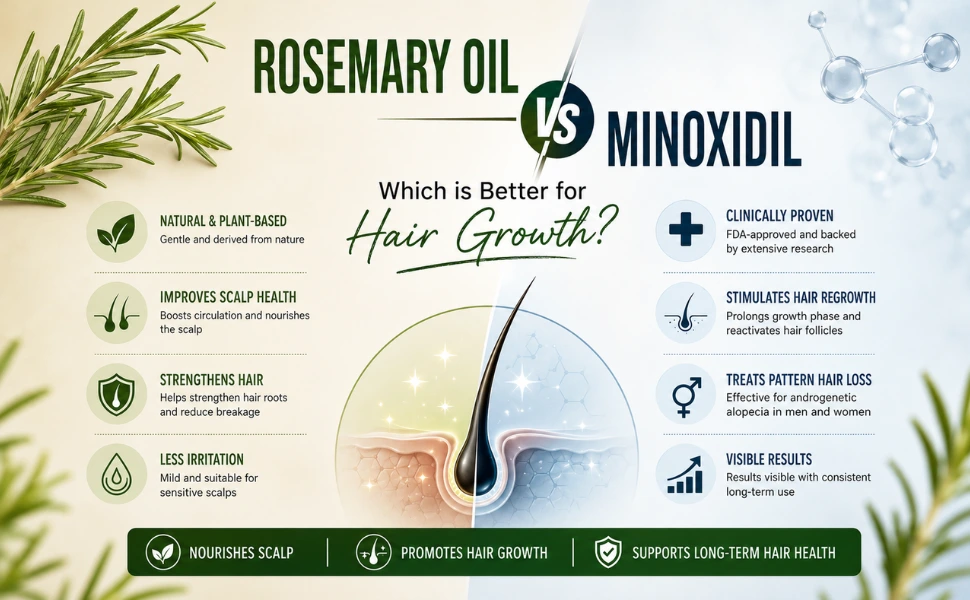
Modern research suggests rosemary oil may stimulate hair follicles similarly to minoxidil while offering a more natural approach.
Benefits of Rosemary Oil
- Improves scalp circulation
- Strengthens hair roots
- Reduces hair fall
- May stimulate dormant follicles
- Helps reduce dandruff
- Controls scalp inflammation
- Supports thicker-looking hair
- Rich in antioxidants
What is Minoxidil?
Minoxidil is an FDA-approved topical medication commonly used for treating pattern hair loss.
It was originally developed to treat high blood pressure but researchers noticed an interesting side effect—patients experienced increased hair growth.
Today, it is one of the most prescribed topical hair loss treatments worldwide.
Benefits of Minoxidil
- Clinically proven for hair regrowth
- FDA-approved
- Works for male and female pattern baldness
- Helps extend hair growth cycle
- Stimulates inactive follicles
| Feature | Rosemary Oil | Minoxidil |
|---|---|---|
| Natural | ✅ Yes | ❌ No |
| FDA Approved | ❌ No | ✅ Yes |
| Prescription Required | ❌ No | ❌ No |
| Side Effects | Very Mild | Moderate |
| Scalp Irritation | Rare | Common |
| Hair Growth | Good | Excellent |
| Long-term Use | Safe | Required |
| Suitable for Sensitive Skin | Better | Sometimes Irritating |
| Cost | Affordable | Moderate |
| Additional Hair Nourishment | Yes | No |
How Does Rosemary Oil Work?
Rosemary oil works through multiple mechanisms:
1. Improves Blood Circulation
Hair follicles need oxygen and nutrients.
Rosemary oil increases blood flow to the scalp, delivering more nutrients to hair roots.
2. Reduces Inflammation
Inflammation weakens follicles over time.
Rosemary oil contains anti-inflammatory compounds that help maintain a healthier scalp environment.
3. Protects Hair Follicles
It contains antioxidants that reduce oxidative stress—a factor associated with premature hair thinning.
4. Strengthens Hair
Regular scalp massage with rosemary oil can reduce breakage and improve hair thickness over time.
How Does Minoxidil Work?
Minoxidil works by:
- Increasing blood supply to follicles
- Prolonging the anagen (growth) phase
- Enlarging miniaturized follicles
- Encouraging new hair growth
However, the exact mechanism is still not completely understood.
Which One Works Faster?
Minoxidil
Visible results generally appear within:
- 3–6 months
Initial shedding is common.
Rosemary Oil
Results usually require:
- 3–6 months of consistent use
Natural treatments often take patience but may be easier to tolerate for some users.
Scientific Evidence
A well-known clinical study published in 2015 compared rosemary oil with 2% minoxidil over six months in people with androgenetic alopecia.
The study found:
- Both groups experienced a significant increase in hair count after six months.
- There was no significant difference in hair growth between the two groups by the end of the study.
- Participants using rosemary oil reported less scalp itching than those using minoxidil.
This suggests rosemary oil may be a promising natural alternative for some people, though larger and longer-term studies are still needed.
Side Effects Comparison
Rosemary Oil
Possible side effects:
- Mild irritation (rare)
- Allergic reaction if not diluted
- Strong fragrance
Always dilute essential rosemary oil with a carrier oil before applying directly to the scalp.
Minoxidil
Common side effects:
- Scalp irritation
- Dryness
- Itching
- Flaking
- Initial shedding
- Unwanted facial hair growth (in some users)
Stopping minoxidil often leads to gradual loss of the hair maintained by treatment.
Which is Better for Different Hair Problems?
Pattern Hair Loss
Winner:
Minoxidil
It has the strongest clinical evidence and regulatory approval for androgenetic alopecia.
Mild Hair Fall
Winner:
Rosemary Oil
It may help improve scalp health and reduce breakage while supporting healthier hair growth.
Sensitive Scalp
Winner:
Rosemary Oil
It is generally less irritating when properly diluted.
Natural Hair Care
Winner:
Rosemary Oil
Ideal for people who prefer botanical ingredients and holistic hair care routines.
Can You Use Rosemary Oil and Minoxidil Together?
In some cases, people choose to use both as part of a hair care routine. However:
- Apply them at different times of the day.
- Watch for irritation.
- If you have scalp conditions or significant hair loss, consult a dermatologist before combining treatments.
Tips to Maximize Hair Growth
Regardless of the treatment you choose:
- Eat a protein-rich diet.
- Maintain adequate iron, vitamin D, zinc, and vitamin B12 levels if deficient.
- Reduce stress.
- Avoid excessive heat styling.
- Massage your scalp regularly.
- Use a gentle, sulfate-free shampoo.
- Stay consistent for at least 3–6 months before evaluating results.
Frequently Asked Questions
Is rosemary oil as effective as minoxidil?
One clinical study found similar improvements in hair count after six months, but minoxidil has a larger body of evidence supporting its use for pattern hair loss.
Can rosemary oil regrow bald spots?
It may help in some cases of early thinning, but established bald areas often require medical evaluation and treatment.
Does rosemary oil cause hair shedding?
Some people notice temporary shedding as hair cycles change, but it is generally less commonly reported than with minoxidil.
Is minoxidil permanent?
No. If you stop using minoxidil, the benefits typically diminish over several months, and hair may gradually return to its previous state.
Which is safer?
Both are generally safe when used correctly. Rosemary oil should always be diluted before topical use, while minoxidil should be used according to the product instructions.
Final Verdict
Both rosemary oil and minoxidil have a place in hair care, but the best choice depends on your goals.
If you’re looking for a clinically proven treatment for pattern hair loss, minoxidil has the strongest evidence and regulatory approval.
If you prefer a natural option that supports scalp health and may promote hair growth with fewer irritation-related side effects, rosemary oil is a compelling choice.
Consistency is essential with either approach. Hair growth is gradual, and meaningful improvements often take several months.
Why Choose Vela Organic Rosemary Hair Oil?
If you’re looking for a natural way to support healthier hair, Vela Organic Rosemary Hair Oil is crafted with a blend of rosemary, amla, bhringraj, brahmi, hibiscus, moringa, curry leaves, onion seed, fenugreek, and nourishing cold-pressed oils. Regular scalp massage with this blend can help nourish the scalp, strengthen hair, and complement a healthy hair care routine.
Explore our Rosemary Hair Oil and give your hair the nourishment it deserves.